BUILD · Built, not consulted
Why we're calling this a library, not a blog
A note on what the Wordwise Library is for, what it won't be, and the cadence we're committing to.
This is the first post on the new Wordwise Library. Calling it that on purpose.
A blog is a content quota. A library is a thesis with shelves. We've spent enough time watching the SMB AI discourse drift between hype posts and vendor-rewritten case studies to know which one earns its keep.
What the library is for
There's a category of writing about AI for small businesses that doesn't exist on the internet right now — and the absence is doing real damage. Most of what's published assumes you're either an enterprise with a three-quarter procurement cycle or a hobbyist looking for tool recommendations. The middle is empty. That middle is most of the market we serve.
We're trying to fill it. Not with volume. With three cornerstone pieces under three pillars, internal-linked tightly, updated when the underlying numbers move, and surrounded by narrower spoke pieces that point back to the canonical answer.
The three pillars
Audit — audit before you automate. Before any AI build, audit what you're actually doing. Most "AI projects" fail because the underlying process was a mess. Audit-pillar posts focus on diagnosis. The cornerstone here is the WARS framework — a 5-dimension diagnostic with a published rubric and a tier system. Score yourself in five minutes. Know whether you should be building yet.
Stay — we don't disappear after go-live. The hardest part of any AI deployment is the second 90 days. Stay-pillar posts focus on what real post-launch ownership looks like. The cornerstone is the 90-Day Playbook — four phases of structured post-launch work, ending in an independence test on Day 75 and a Day 91 decision (renew, release, or rebuild) that is never a default.
Build — built, not consulted. Wordwise's edge is shipping working systems, not slide decks. Build-pillar posts focus on implementation patterns. The cornerstone is the Wordwise build stack — the specific tools we reach for, what they cost, and the three cases where we'd choose differently.
What every post commits to
Three things, every post:
- A specific operator-facing problem we've actually seen.
- A defensible number — saved, earned, or measured. Sourced if it isn't ours.
- A clear next move, even if that next move is "do nothing yet."
If a post drops a generic claim without a number behind it, we'd rather not publish it. If a post can't survive a "so what?" from a busy operator, it doesn't ship.
The WARS framework is also an assessment
The library piece explains the framework. The free assessment runs the full version on your business and returns a written report. Five minutes. No call. No follow-up sequence.
Take the 5-min assessmentA note on what won't be here
Hot takes about whether GPT-X is conscious. Lists of "10 tools you need." Vendor case studies repackaged as our wisdom. AI-doom posting. AI-utopia posting. We're going to stay close to the ground — what actually works for a 50-person business this quarter.
What's next
The 12-week calendar adds 6-8 spoke pieces over the next quarter, each one pointing back to one of the three cornerstone pieces. We'll cover edge cases (what to do if your data is genuinely a mess; how to write a Day-1 internal-owner job description; how to evaluate vendor pricing creep). We'll publish them when they're done, not when the calendar says.
Three pillars. One library. Sharper takes than the feed.
FAQs
Why a library and not a blog?
Blogs publish on a calendar. Libraries publish on a thesis. We're shipping a small set of cornerstone pieces under three pillars and treating each one as a long-lived artifact, not a content quota. The cornerstone pieces get internal-linked, citation-tracked, and updated when the underlying numbers move. That's a library. The 8-12 spoke pieces around each cornerstone are the index — narrower questions that point back to the canonical answer.
How often will you publish?
Slowly. The 12-week calendar plans for ~3 hub pieces and ~6 spokes total in the first quarter. We'd rather ship five posts that get cited than fifty that disappear into the feed. The cadence ramps as the pillars fill in.
What won't you write?
Generic AI hot takes. 'X tools you need' listicles. Restated vendor docs. Anything that ends in '...and that's why you should book a call.' We respect your time more than that.
Who's this for?
SMB operators (5-200 employees) deciding whether to invest in AI, and what to invest in first. If you're a Fortune 500 CIO running a five-quarter procurement cycle, you'll find this too direct.
Keep reading
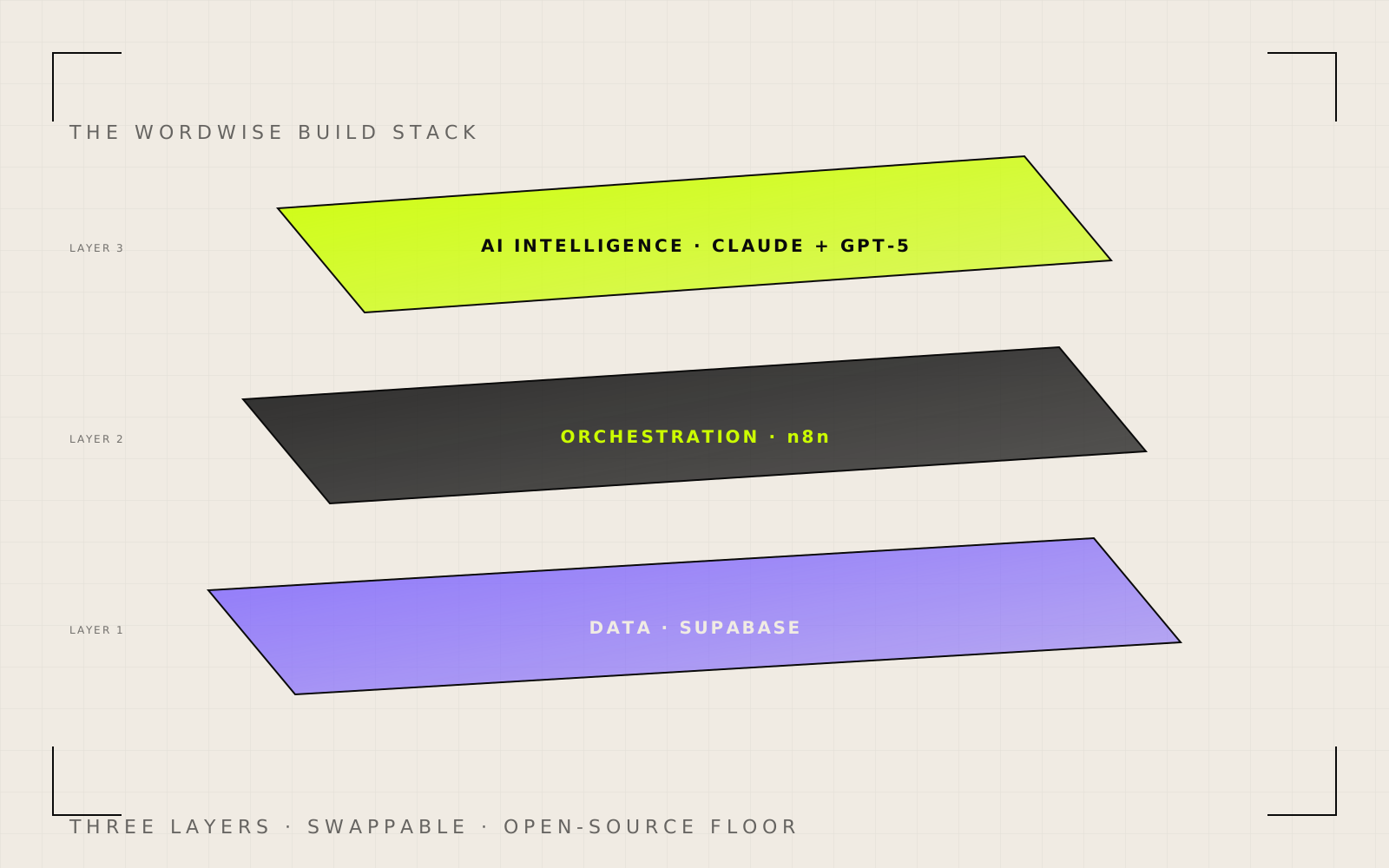
The Wordwise build stack: what we use, why, and when we'd choose differently
The exact stack we use to ship AI automation for SMBs. n8n, Claude, Supabase, Resend, Cal.com, Cloudflare. Costs, trade-offs, when we'd pick differently.
Roni Ravikumar · 20 min read
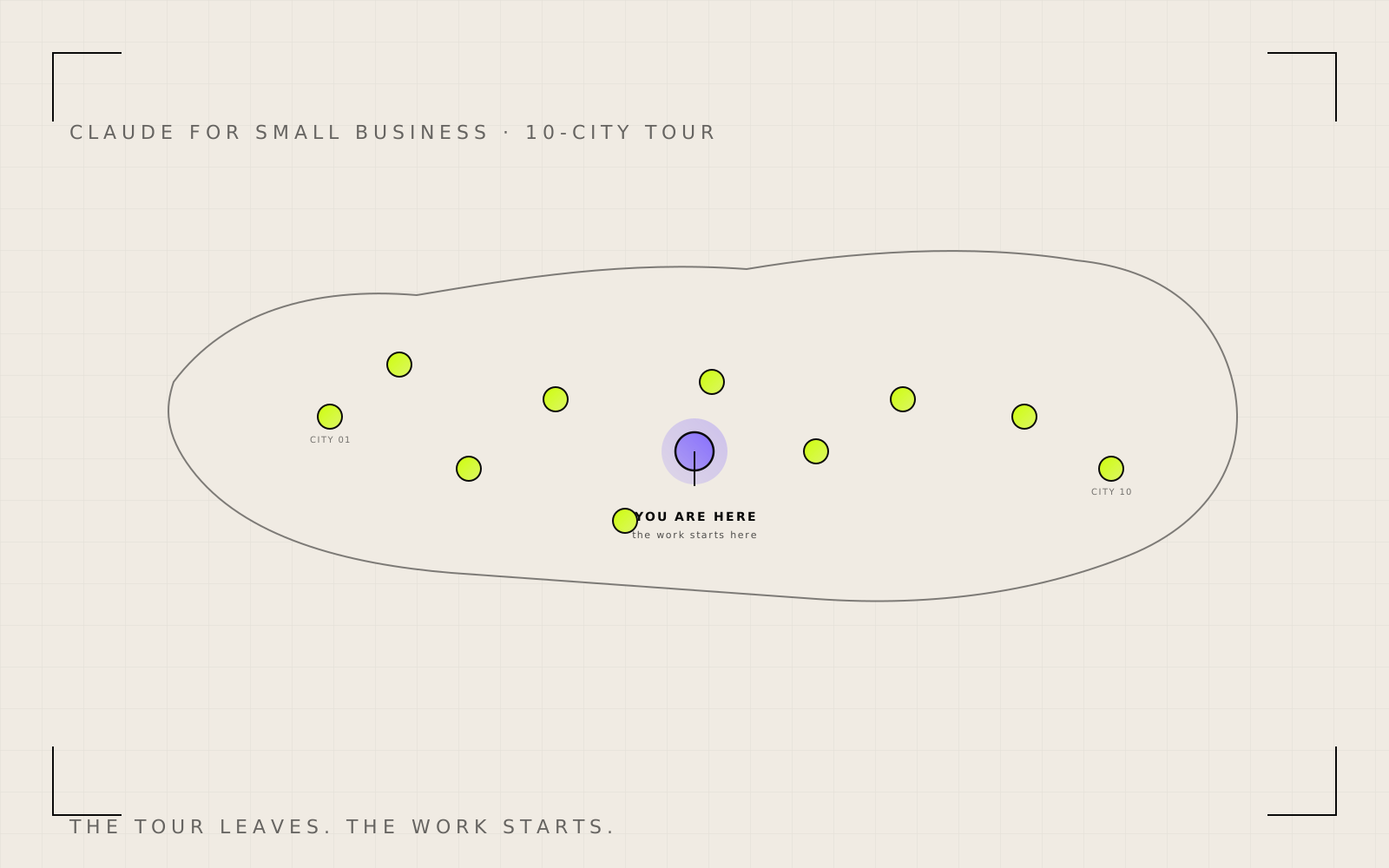
Anthropic just spent ten cities pitching Claude to small business. Here's what you should actually do.
Anthropic took Claude on a 10-city tour pitching small business owners on AI. The tour answers the wrong question. Here's the conversation we'd run with any owner before they buy a single seat.
Roni Ravikumar · 13 min read
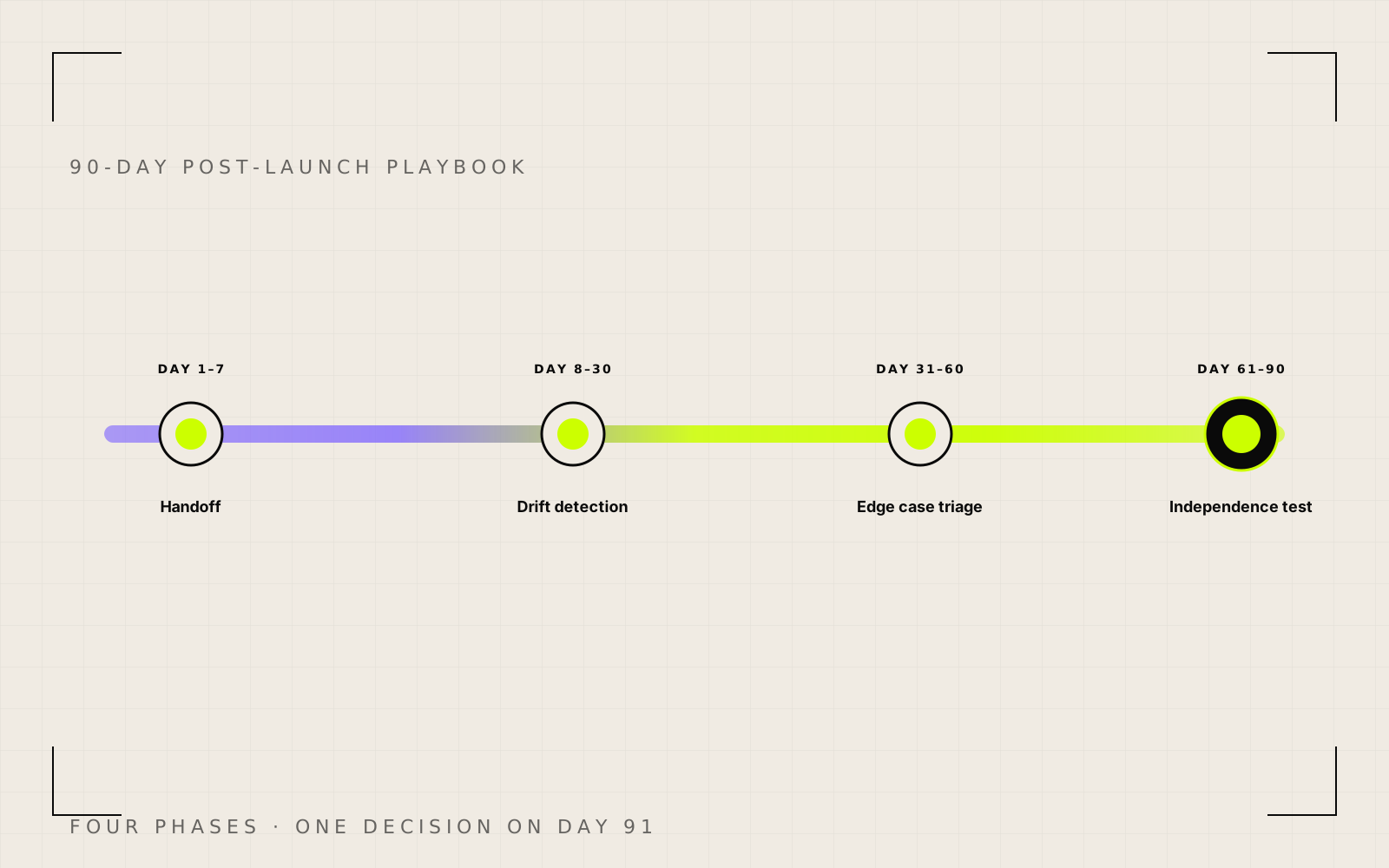
The 90-day post-launch playbook: what a real AI agency does after go-live
Most AI builds die quietly inside 90 days because nobody owned them after go-live. Here is the 90-day post-launch playbook a real AI agency runs.
Roni Ravikumar · 15 min read